Natural facial-hair restoration
Beard Transplant
Fill selected beard gaps or improve shape using your own suitable donor follicles and direction-sensitive placement.
Understand your options
Is Beard Transplant right for you?
A beard transplant redistributes suitable donor follicles into selected facial areas. Careful design and correct hair direction are central to a natural result.
Your recommendation follows a proper review of your hair loss pattern, donor area, scalp health, medical history and realistic expectations. Your free assessment gives you clear guidance before you commit to treatment.
Designed around your facial structure
A beard transplant can strengthen selected gaps, reshape the cheek line, improve moustache-to-beard continuity or add coverage through the jaw and chin. The design is agreed against your natural growth pattern and the proportions of your face.
Direction is the foundation of realism
Facial hair changes direction across the cheek, moustache, chin and jaw. Each recipient site is prepared to reproduce those transitions so the transplanted hair lies naturally rather than standing away from the skin.
Healing and beard growth
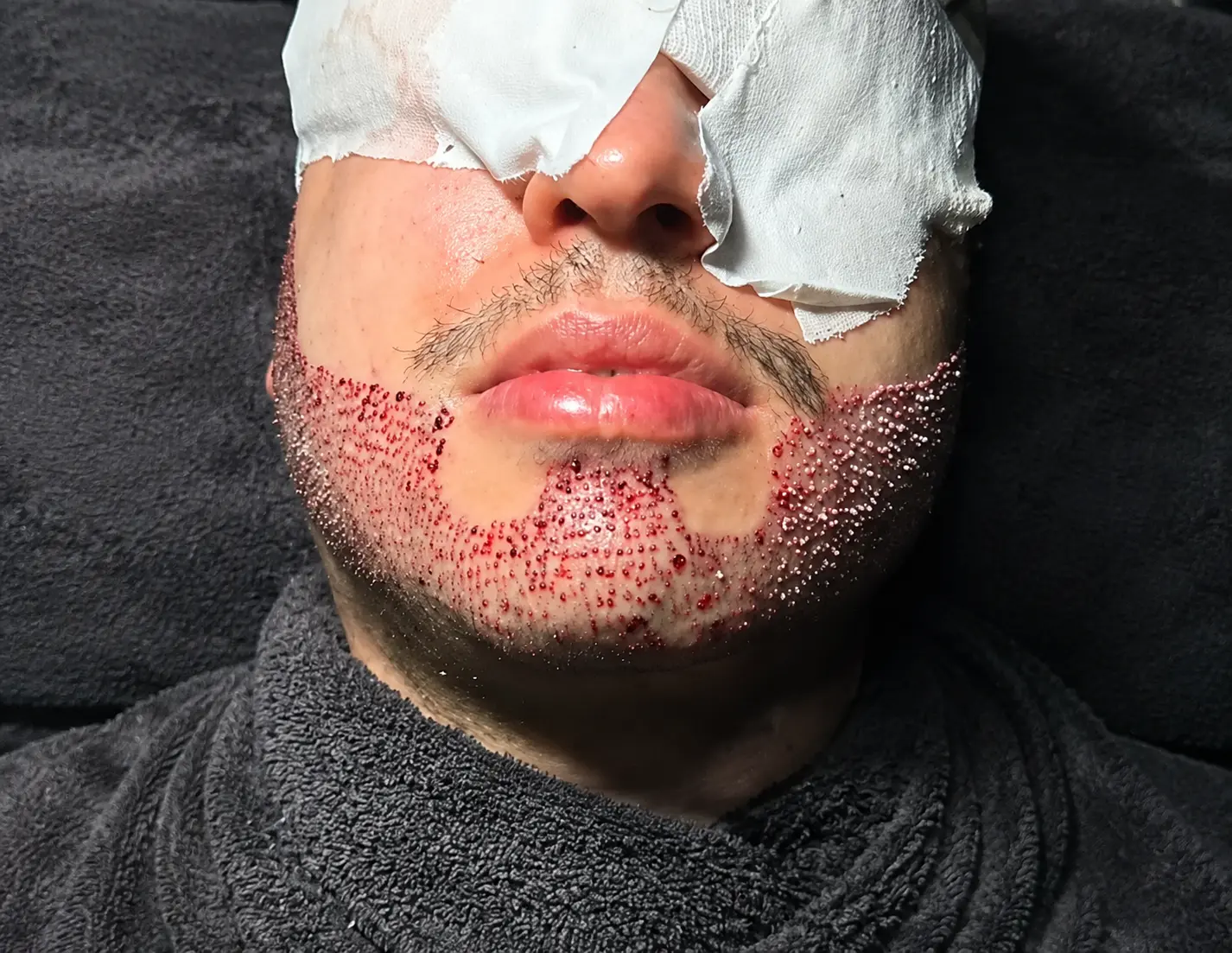
Short-term redness, small crusts and temporary shedding are expected parts of early recovery. New growth develops progressively over the following months. Once mature, transplanted hairs can be trimmed and groomed as part of your normal beard routine.
You may be suitable if…
- You have patchy or uneven beard growth
- You want to refine the cheek, jaw or moustache area
- A suitable donor area is available
- Your skin and medical history support treatment
Potential advantages
- Designed around your facial proportions
- Uses your own suitable follicles
- Direction-sensitive placement
- Can address selected gaps, scars or asymmetry
Your treatment journey
Know what happens before you decide.
- 01
Facial assessment
Your growth pattern and desired shape are reviewed.
- 02
Beard design
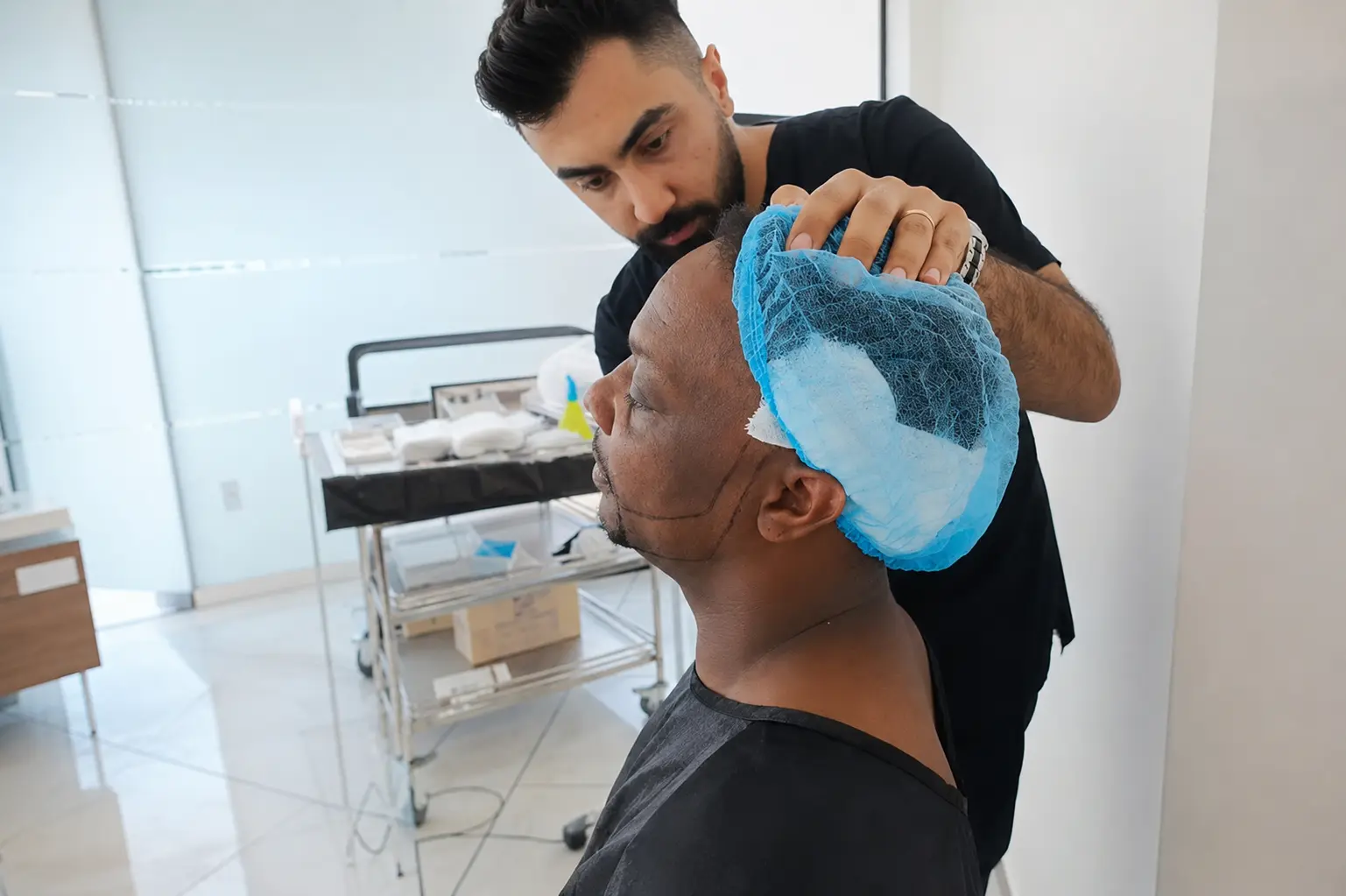
The cheek, jaw and transition zones are mapped.
- 03
Donor extraction
Suitable follicles are selected individually.
- 04
Placement
Grafts follow the natural direction of facial hair.
- 05
Healing and growth
You receive beard-specific aftercare and reviews.
Clear answers
Questions clients often ask
Will transplanted beard hair need trimming?
Yes. Donor hairs retain many of their original characteristics and may need routine trimming and grooming.
Can scars be covered?
Selected scars may be suitable, but circulation, skin quality and expected graft survival require individual assessment.
How much does Beard Transplant cost?
Your price is prepared after reviewing the treatment area, donor supply, technique and complete care plan. Our packages are structured to remain accessible and are generally more affordable than comparable private clinic standards in Western countries, without reducing the importance of specialist planning, clinical care and follow up.
How long does the procedure take?
The timing follows the size and technical requirements of your treatment plan. Hair-transplant procedures commonly occupy most of the treatment day, while SMP and PRP appointments are shorter and may be delivered as a planned course of sessions. Your coordinator confirms the schedule before you book.
How is comfort managed?
The team prepares you carefully and uses the appropriate comfort measures for the procedure. Hair transplantation is performed with local anaesthesia; SMP and PRP use a treatment specific comfort approach. You remain able to communicate with the team throughout.
When can I return to normal activities?
Light daily activity usually resumes quickly, but the treated area needs protection during early healing. You receive precise guidance for washing, sleeping, exercise, sun exposure, headwear and work based on the procedure you choose.
How do I begin?
Start with the free online assessment or book a free clinic visit. Clear photographs and a short history allow the team to identify the most relevant option, explain the plan and prepare your quotation before you make a commitment.
Are transplanted follicles permanent?
Follicles taken from a suitable donor region generally retain their donor characteristics after successful healing. Existing non-transplanted hair can continue to change, which is why responsible donor planning and long term review matter.
This page provides general information and does not replace a personal clinical assessment. Suitability, recovery and results vary. No specific graft count, density or outcome is guaranteed.